Front End vs Back End Development: An Expert Guide for Businesses and Developers
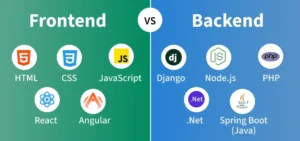
In the ever-evolving digital world, understanding the distinction between front end vs back end development is essential for anyone building websites, applications, or digital platforms. While both roles are critical to web development, they serve different purposes, require distinct skill sets, and contribute uniquely to the user experience and functionality of a product.
Drawing from years of experience working with startups, large enterprises, and web platforms, this guide explains the nuances of front end vs back end development and helps businesses, developers, and students make informed decisions.
What Is Front End Development?
Front end development focuses on the part of a website or application that users interact with directly. Often called the “client-side,” front-end development involves designing and implementing interfaces, layouts, and interactive elements to ensure a seamless user experience.
Key Responsibilities of Front-End Developers:
Building responsive layouts using HTML, CSS, and JavaScript
Implementing interactive features such as buttons, forms, and animations
Optimizing website performance for speed and responsiveness
Ensuring accessibility across devices and browsers
In the discussion of front end vs back end development, front-end development emphasizes usability, design, and user engagement, bringing digital products to life visually.
What Is Back End Development?
Back end development refers to the server-side of a website or application. This “behind-the-scenes” work ensures that websites function correctly, handle data securely, and deliver the necessary information to the front end.
Key Responsibilities of Back-End Developers:
Developing server-side applications and APIs
Managing databases (SQL, NoSQL, or other formats)
Ensuring security, authentication, and data integrity
Optimizing server performance and scalability
While often invisible to users, back-end development is vital for functionality, reliability, and performance. In the comparison of front end vs back end development, the back end ensures that everything the user sees works smoothly.
Core Differences: Front End vs Back End Development
Understanding the differences between these two disciplines helps businesses and developers align resources and strategies effectively.
| Aspect | Front End Development | Back End Development |
|---|---|---|
| Focus | User interface, design, and interactivity | Server logic, databases, and performance |
| Technologies | HTML, CSS, JavaScript, React, Angular, Vue | Python, Java, PHP, Node.js, Ruby, SQL/NoSQL |
| Goal | Enhance usability, responsiveness, and visual appeal | Ensure functionality, data integrity, and speed |
| Interaction | Direct user interaction | Indirect, through APIs and servers |
| Skills Needed | Design sense, coding for interactivity, responsive layouts | Server-side programming, database management, security |
This comparison highlights why expertise in front end vs back end development requires different skill sets and mindsets.
Skills Required for Front End Development
Front-end developers need a combination of technical and design skills to build interfaces that delight users.
Essential skills include:
Proficiency in HTML, CSS, and JavaScript
Knowledge of frameworks like React, Angular, or Vue.js
Understanding responsive and mobile-first design
Awareness of UX/UI principles
Familiarity with version control (e.g., Git)
Front-end developers ensure that the website or application is visually appealing, interactive, and easy to use.
Skills Required for Back End Development
Back-end developers focus on server-side logic, databases, and application performance. Core competencies include:
Server-side programming in Python, Java, PHP, or Node.js
Database management and optimization (SQL, NoSQL)
API development and integration
Security protocols, authentication, and encryption
Performance tuning and scalability
Back-end development ensures that the digital product functions reliably, securely, and efficiently.
Full-Stack Development: Bridging Front End and Back End
Full-stack developers are proficient in both front-end and back-end development. They understand front end vs back end development and can integrate the two seamlessly.
Full-stack expertise is particularly valuable for startups or smaller teams, where a single developer may need to handle both interfaces and server logic. It also enhances collaboration between design and technical teams.
Tools and Frameworks
Choosing the right tools boosts productivity and project quality:
Front-End Tools:
Frameworks: React.js, Angular, Vue.js
CSS Libraries: Bootstrap, Tailwind CSS
Build Tools: Webpack, Parcel
Back-End Tools:
Frameworks: Django, Express.js, Spring, Laravel
Databases: MySQL, PostgreSQL, MongoDB
Servers & Hosting: AWS, Azure, Heroku
These tools illustrate how front end vs back end development operates in different technical ecosystems.
Career Opportunities in Front End vs Back End Development
Understanding these roles helps aspiring developers and businesses plan effectively:
Front-End Career Paths:
Front-End Developer
UI/UX Engineer
Web Designer with Coding Expertise
React/Angular Specialist
Back-End Career Paths:
Back-End Developer
Database Administrator
DevOps Engineer
API & Server-Side Specialist
Businesses benefit by hiring the right talent aligned with project requirements and developer skill sets.
Why Businesses Should Understand Front End vs Back End Development
For organizations, knowing the distinction between front end vs back end development ensures:
Effective hiring decisions
Accurate project timelines and resource allocation
Enhanced collaboration between teams
Better quality and maintainable digital products
Businesses that leverage both front-end and back-end expertise can deliver faster, user-friendly, and robust applications.
Common Misconceptions
Some myths about front end vs back end development include:
Myth: Back-end development is not creative.
Fact: Back-end developers solve complex problems and optimize systems, requiring innovation and strategic thinking.Myth: Front-end development is easier.
Fact: Front-end development demands coding skills, design sense, and user experience knowledge, which can be equally challenging.
Understanding these realities ensures better career choices and project planning.
Final Thoughts
In conclusion, front end vs back end development represents two interdependent aspects of web development. Front-end development delivers the visual experience and user interaction, while back-end development powers the logic, database handling, and server performance behind the scenes.
By understanding the distinctions, aspiring developers can choose the right career path, and businesses can hire and manage teams more effectively. For modern digital projects, success depends on the collaboration and integration of both front-end and back-end expertise.
Whether you aim to specialize in one area or become a full-stack developer, mastering the concepts of front end vs back end development is essential for creating high-performing, scalable, and user-friendly applications.
to check more blog click here